Towing services play a vital role in roadside assistance, vehicle recovery, and transport. Whether it’s a breakdown, accident, or simply moving a car from point A to point B, towing companies rely on a range of vehicle transport methods. When you call our team at D&R Towing for a tow or roadside assistance, we’ll use a different towing method depending on the vehicle and the situation.
How do towing services decide which method to use? Here’s a look at the options and when we use them.
Four Ways to Tow
Flatbed Towing
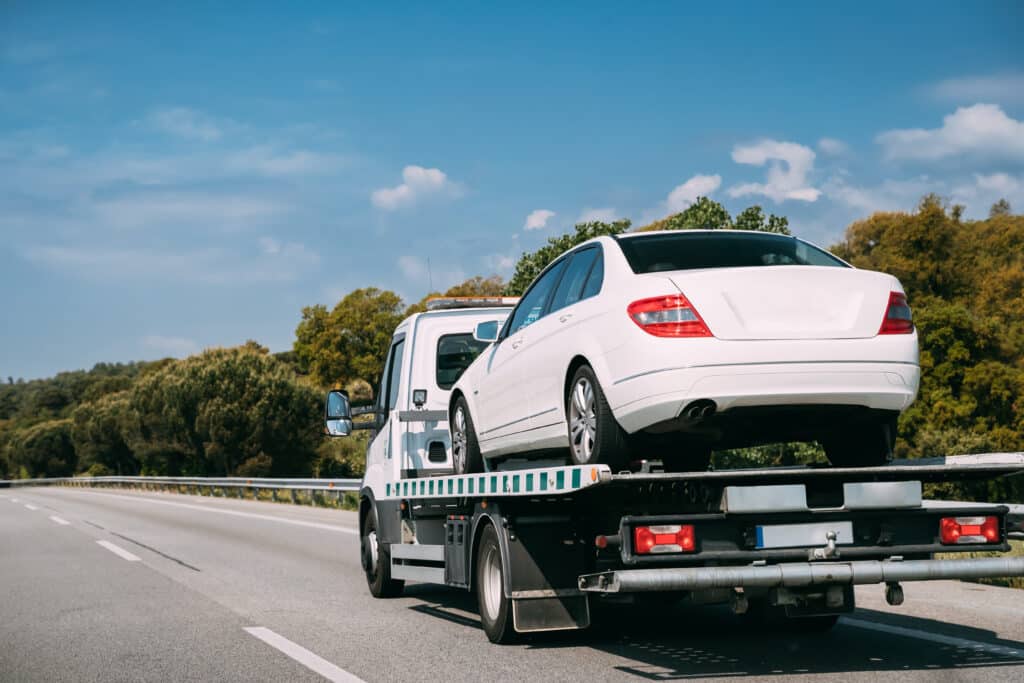
Flatbed tow trucks are one of the most widely used and safest towing methods. The vehicle is completely lifted off the ground and secured on a flat platform. This method is ideal for all-wheel-drive vehicles, luxury or classic cars, and severely damaged vehicles. Because all wheels are off the ground, there’s no wear and tear during transport. It’s the best option when the car is immobile, low-clearance, high-value, or needs extra protection.
Wheel-Lift Towing
This method uses a metal yoke that lifts either the front or rear wheels of the vehicle while the other wheels stay on the road. It’s faster and more affordable than flatbed towing, but not as protective. We use this method for short distances, lighter vehicles, or when a flatbed is unavailable.
Hook and Chain Towing
When you think of a tow truck, hook and chain towing is most likely the picture you have in your head. However, we rarely use this method because it can damage the vehicle. It involves securing chains around the car’s frame or axle and pulling it with the rear wheels on the ground. Now, it is usually only used for junk or wrecked cars being taken to salvage yards.
Integrated (Boom) Tow Trucks
These trucks combine elements of wheel-lift and boom tow trucks. They’re most common for repossessions or when a vehicle is in a tight space. The arm is controlled from inside the truck, making it quick and efficient. Towing companies use it for heavy-duty towing, quick repossessions, or vehicles in hard-to-reach places.
How Tow Operators Decide
So, how do we decide which method to use? Tow truck operators assess several factors: vehicle type (AWD, RWD, size), condition (drivable or damaged), location (tight spot, highway, off-road), and transport distance. We always consider safety, speed, and the potential for damage before dispatching the right truck. Choosing the right method ensures efficient service and protects your vehicle during transit.